
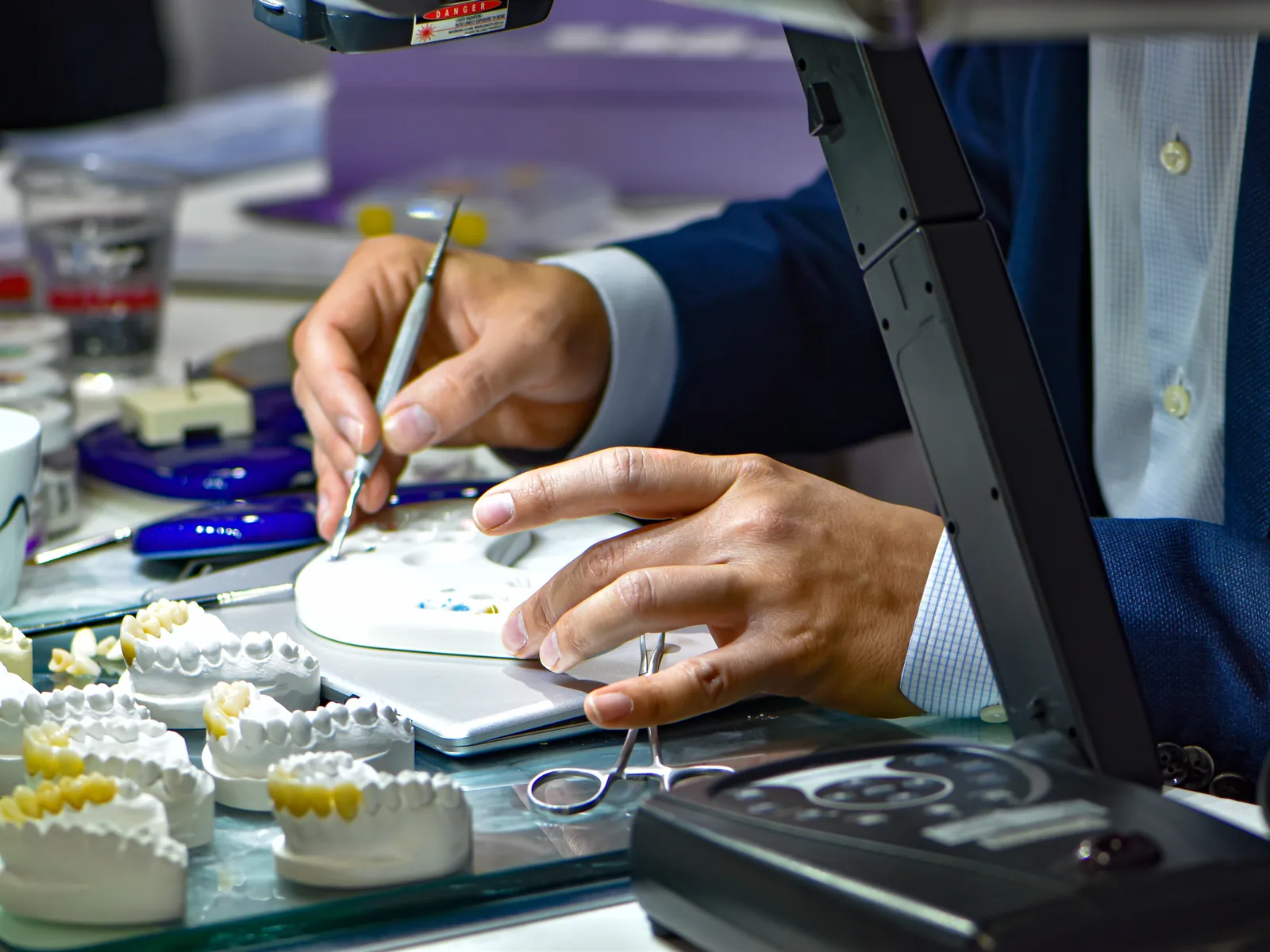
A crown is a durable restoration of a damaged or weakened tooth that restores its shape, function and appearance. At NL Clinic in Katowice we make all-ceramic crowns, including zirconia, whose appearance is close to a natural tooth. We select the type of crown and the treatment approach individually, after an examination and a conversation about your expectations.
What all-ceramic crowns, including zirconia, are
An all-ceramic crown is made entirely of ceramic, with no metal substructure, so it does not create a dark line at the gum. The ceramic materials themselves, however, differ from one another. Glass-ceramic, for example based on lithium disilicate, transmits light similarly to natural enamel.
Oxide ceramic, that is zirconium dioxide (colloquially zirconia), stands out for its high strength. Zirconia is also a metal-free ceramic, which is why a zirconia crown belongs to the all-ceramic crowns. The choice of ceramic depends on which tooth is being restored and how large the forces acting on it are.
Crowns are made in two ways. In the monolithic version the whole crown is made from a single, strong material, which works well for posterior teeth carrying large chewing forces. In the layered version the technician applies veneering ceramic onto a strong core, building depth of colour and tonal transitions close to a living tooth, which raises aesthetics where natural translucency matters. The choice of variant depends on which tooth is being restored and the aesthetic expectations.
A note on the terms: all-ceramic means without metal inside, zirconia points to the type of ceramic (zirconium dioxide), and layered describes how the technician builds up aesthetics. A zirconia crown is also all-ceramic.
When a crown is worth considering
A crown is considered, among others, when:
- the tooth is significantly damaged by decay or a fracture and cannot be rebuilt with a filling alone,
- a root-canal-treated tooth with a large loss of tissue is more prone to fracture, and a crown protects it by covering the preserved tooth walls; the extent of the restoration, a crown or a less invasive onlay, is decided after assessing how much healthy tissue remains,
- you want to improve the shape or colour of a tooth that whitening or a smaller correction can no longer change,
- you are restoring a tooth on an implant (a crown on an implant),
- a worn or damaged crown needs replacing.
Whether a crown is the best solution in your case is decided by the dentist after an examination. Sometimes a less invasive treatment is enough, for example a veneer or a composite build-up, and then we propose it.
Layered aesthetics, a natural look
A natural tooth does not have one flat colour. It has different shades at the neck and at the edge, subtle translucency and an individual character. In aesthetic crowns we aim to reproduce these features.
We choose the colour together: the dentist and the technician match the shade to the neighbouring teeth and to the features of the face, often in natural light. In more demanding cases a try-in and a colour consultation with the laboratory are possible before the crown is finally finished.
We plan the result together with you and the technician. We aim for a natural appearance of the restoration, matched to the remaining teeth, and the final result depends on the individual conditions in the mouth.
How the treatment goes, step by step
- Consultation and examination. We assess the condition of the tooth and tissues, take an X-ray or a CBCT scan if needed, and set the plan together.
- Preparing the tooth. The tooth is prepared for the crown; sometimes earlier treatment is necessary, for example root canal treatment.
- Scan or impression. We take a digital intraoral scan or a classic impression, from which a precise model is made.
- The dental laboratory stage. We entrust the design and making of the crown to a trusted laboratory. Depending on the chosen solution, the crown is made as monolithic, from a single block, or layered, when veneering ceramic is applied onto the core. We agree the colour with the laboratory.
- Try-in and cementation. We check the fit, the contact with adjacent teeth and the bite, and after your acceptance the crown is fixed permanently.
- Follow-up. We arrange a check-up visit and give care recommendations.
The number of visits and the treatment time depend on the starting situation and we set them individually.
Zirconia and other crown materials
The choice of material depends on which tooth is being restored, the forces acting on it and how high the aesthetic requirements are.
- Glass-ceramic crowns usually best convey natural translucency, so they are often chosen in the anterior zone.
- Zirconium dioxide crowns combine high strength with good aesthetics and work especially well for posterior teeth, and in the anterior zone in more translucent variants or in the layered technique.
- Both groups are metal-free ceramic. They differ in the type of ceramic, not in the presence of metal.
The dentist chooses the material together with you, after an examination. There is no single best solution for everyone; there is a solution best matched to the specific tooth and expectations.
Durability and care
Zirconium dioxide and the other ceramics are durable materials, resistant to everyday loads. The lifespan of a crown, however, depends on oral hygiene, habits (for example teeth grinding) and regular check-ups.
A crown is cared for like your own teeth: thorough brushing, cleaning between the teeth and check-up visits with hygiene. If you tend to clench your teeth, the dentist may recommend a protective splint.
Our approach
We work with steady dental laboratories proven over years of practice, which lets us keep repeatable quality of prosthetic work.
Treatment is carried out by dentists experienced in aesthetic prosthodontics. In the clinic we use imaging diagnostics and an intraoral scanner, and an examination always precedes the treatment plan.
NL Clinic has operated in Katowice, Silesia, since 2002; we see patients from Katowice, Chorzow and the surrounding area.
Cost
The price of a crown depends on the material, the number of teeth and the extent of preparation. You will find current prices in our dental price list, and we present a precise quote after an examination and setting the treatment plan.
Frequently asked questions
How does a zirconia crown differ from a porcelain one?
The term porcelain crown is colloquial and covers different solutions. An older metal-ceramic crown has a metal substructure onto which the technician fires porcelain, and over time that substructure can become visible as a darker line at the gum. A zirconia crown has a core or a whole body of zirconium dioxide, while an all-ceramic crown is made entirely of ceramic. Zirconia and other all-ceramic crowns contain no metal, which is why a natural look is usually easier to achieve in them.
Is a zirconia crown durable?
Yes, zirconium dioxide is one of the more durable materials in prosthodontics. Durability depends on hygiene and individual conditions, which is why check-ups matter.
Is it placed in a single visit?
Usually at least two visits are needed, because the crown is made by a dental laboratory from a scan or an impression. We set the exact plan after an examination.
Can a crown be placed on an implant?
Yes, a crown on an implant is one of the common solutions when a tooth is missing. Unlike a crown on your own tooth, we do not prepare tooth tissue: the crown is seated on an abutment fixed in the implant, and the fixation method, screw-retained or cemented, is chosen to suit the situation. We discuss the details when planning the treatment.
How to care for a crown?
Just like your own teeth: thorough hygiene, cleaning between the teeth and regular check-ups.